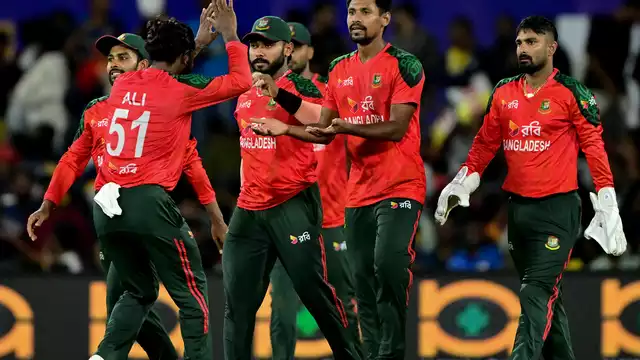
ICC upholds T20 Cup 2026 schedule; Bangladesh fixtures to be played in India
The International Cricket Council (ICC) on Wednesday confirmed that the ICC Men’s T20 World Cup 2026 will proceed as per the published schedule, with Bangladesh’s matches set to be played in India, despite a request from the Bangladesh Cricket Board (BCB) to relocate its fixtures to Sri Lanka.
The decision followed an ICC Board meeting, held via video conference, convened specifically to address the impasse created after the BCB sought a change to the tournament itinerary. After reviewing multiple security assessments — including independent evaluations — the Board concluded there was no credible threat to the safety of Bangladesh players, officials, media or supporters at any of the Indian venues.
In a strongly worded statement, the ICC stressed that altering the schedule at this stage of the tournament cycle was neither practical nor justified. The Board noted that making changes “so close to the tournament” would not only create significant logistical challenges but could also “set a precedent that would jeopardise the sanctity of future ICC events and undermine its neutrality as a global governing body.”
The ICC also revealed that extensive efforts had been made to engage with the BCB in an attempt to resolve the issue. These included a series of meetings and written exchanges in which the ICC shared detailed information on the tournament’s security framework, including layered federal and state law-enforcement arrangements in India.
An ICC spokesperson said the governing body had acted in good faith throughout the process. “Over the past several weeks, the ICC has engaged with the BCB in sustained and constructive dialogue, with the clear objective of enabling Bangladesh’s participation in the tournament,” the spokesperson said.
“During this period, the ICC has shared detailed inputs, including independent security assessments, comprehensive venue-level security plans and formal assurances from the host authorities, all of which consistently concluded that there is no credible or verifiable threat to the safety or security of the Bangladesh team in India.”
The ICC, however, expressed concern that the BCB continued to link its participation to an issue unrelated to the World Cup itself. “Despite these efforts, the BCB maintained its position, repeatedly linking its participation in the tournament to a single, isolated and unrelated development concerning one of its player’s involvement in a domestic league,” the spokesperson added, noting that such a linkage “has no bearing on the tournament’s security framework or the conditions governing participation in the ICC Men’s T20 World Cup.”
Reiterating its position, the ICC said its decisions were based on objective criteria applied equally to all competing nations. “The ICC’s venue and scheduling decisions are guided by objective threat assessments, host guarantees, and the tournament’s agreed terms of participation, which apply uniformly to all 20 competing nations,” the statement said.
“In the absence of any independent security findings that materially compromise the safety of the Bangladesh team, the ICC is unable to relocate fixtures,” the spokesperson added, warning that doing so would have “far-reaching precedent-related challenges that risk undermining the neutrality, fairness, and integrity of ICC governance.”
The ICC concluded by reaffirming its commitment to “upholding consistent standards and safeguarding the collective interests of the global game” as preparations for the 2026 T20 World Cup continue.