


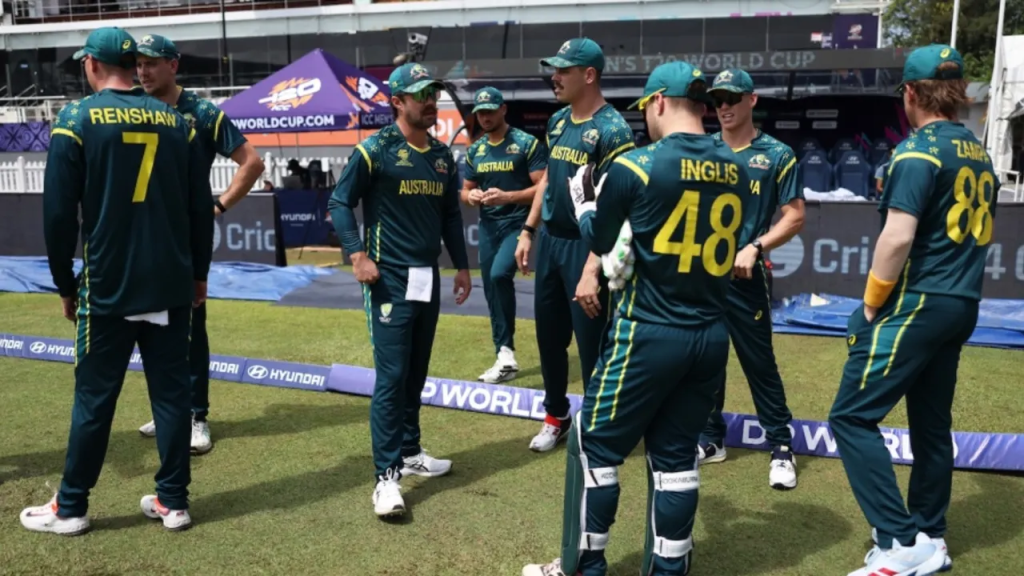
Everything. All at Once.
Australia’s T20 World Cup campaign hasn’t unravelled because of one bad night or one poor decision. It has collapsed under the weight of multiple failures converging at the same time–in selection, preparation, execution and long-term planning. The defeat to Sri Lanka merely exposed problems that had been brewing for months.
Here’s a detailed look at where it all went wrong.
1. Selection backed reputation over form
The loudest criticism will land on the selectors, and not without reason. Persisting with out-of-form players while proven international batters were left carrying drinks spoke of a system unwilling to make tough calls. Blind faith in incumbents proved costly.
2. Preparation sacrificed at the altar of scheduling
Australia arrived undercooked for subcontinent conditions. Prioritising domestic finals over meaningful warm-up games on turning pitches left the squad scrambling for answers once the tournament began.
3. One-dimensional planning
The power-hitting blueprint had worked in familiar conditions, but when it was challenged, there was no alternative. Australia looked like a side married to a single method, unable to adapt when momentum turned.
4. Powerplay bowling crisis
Early wickets are the currency of T20 success, and Australia simply didn’t have enough. Without breakthroughs up front, pressure never built and opposition top orders were allowed to dictate terms.
5. Injury fragility exposed
The fast-bowling depth that once defined Australia suddenly looked thin. Injuries at key moments left the attack unbalanced and robbed the side of its cutting edge.
6. Middle-order collapses at critical moments
Strong platforms were repeatedly squandered. What should have been match-winning totals turned into recoveries, highlighting a worrying lack of composure when the game tightened.
7. Senior players out of rhythm
Several core players entered the tournament short on form and confidence. T20 cricket rarely forgives slow starts, and Australia never recovered from those early misfires.
8. Misreading conditions — repeatedly
Beaten by spin in one match and undone by pace in another, Australia appeared unsure of what the conditions demanded. The inability to correctly assess pitches and match-ups cost them dearly.
9. Lack of sustained wicket-taking threat
Containment without wickets is a losing strategy. Australia’s bowlers applied pressure in patches but couldn’t convert it into dismissals often enough.
10. A deeper issue: T20 still not a priority
Perhaps the most uncomfortable truth is that Australia have not treated T20 cricket with the same seriousness as their rivals. While others plan cycles ahead, Australia appeared to be reacting on the run.
Final word
This may not trigger a full-scale review, but it should prompt serious reflection. With another T20 World Cup on home soil looming in 2028, Australia must decide whether this format deserves genuine long-term investment — or risk more tournaments ending before they truly begin.


