


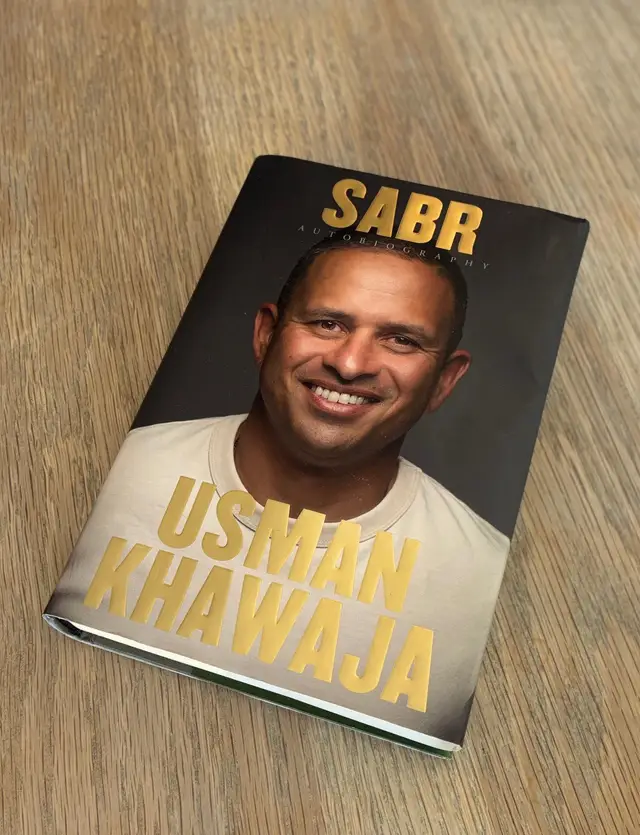
Usman Khawaja’s explosive revelations in his autobiography, David Warner’s renewed criticism of Cricket Australia and former fast bowler Chadd Sayers’ claims that the entire touring party knew about the use of sandpaper have reopened one of cricket’s darkest chapters. But Pat Cummins remains adamant that he knew nothing about the plot, raising fresh questions about accountability, the original investigation and whether the full truth was ever revealed.
Australian cricket’s most damaging controversy was supposed to have been put to rest eight years ago. The punishments were handed down, the players returned, the leadership changed and a new culture was promised. Yet Sandpapergate has come roaring back, with a series of extraordinary revelations threatening to undermine the official version of what happened during the infamous 2018 Test series against South Africa.
At the centre of the renewed controversy is former Australian opener Usman Khawaja, whose autobiography, Sabr, has challenged the long-standing belief that only Steve Smith, David Warner and Cameron Bancroft knew about the ball-tampering operation.
Khawaja’s account is particularly significant because he was part of the touring squad and says he witnessed events inside the dressing room, rather than relying on information that emerged afterwards.
His central allegation is unequivocal: the incident was not simply the work of three individuals but involved a wider team environment in which the use of sandpaper was known and discussed.
“It was all of us. Not the batters, not the bowlers, not the staff. All of us,” Khawaja told Nine newspapers ahead of the publication of his book.
The claim directly challenges Cricket Australia’s original investigation, which identified Smith, Warner and Bancroft as the players responsible and resulted in lengthy suspensions for all three.
More importantly, it places the conduct of the wider Australian touring party under renewed scrutiny.
The revelations begin before Cape Town
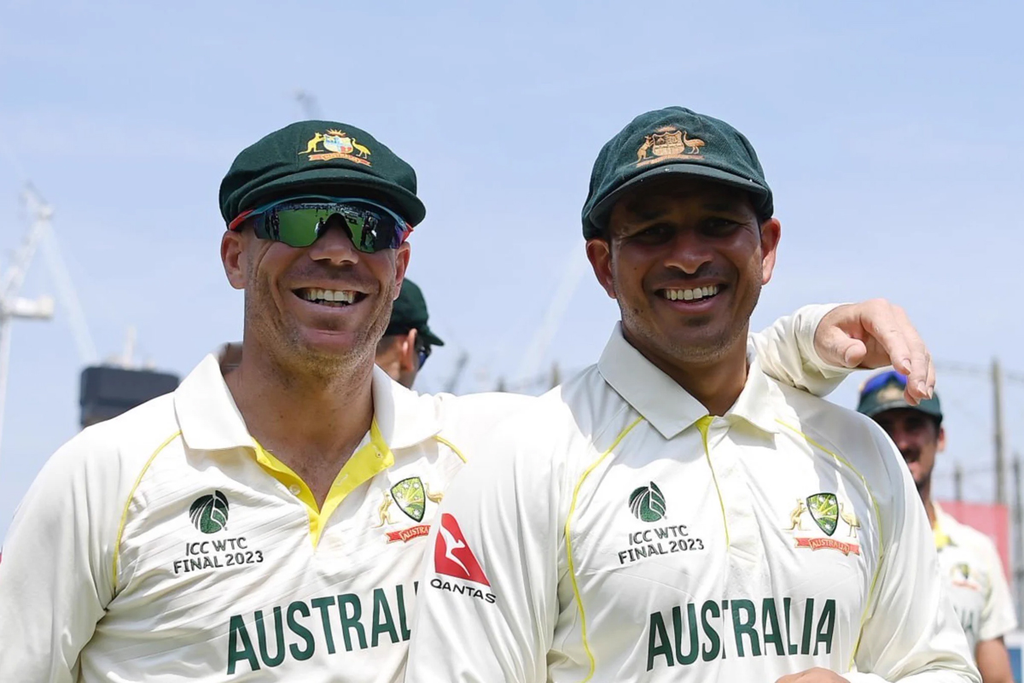
Perhaps the most damaging aspect of Khawaja’s account is that he alleges the practice began during the second Test at Port Elizabeth, now known as Gqeberha, before the incident that shocked the cricket world at Newlands.
According to Khawaja, discussions about getting the ball to reverse swing had taken place in the Australian dressing room. He alleges that a member of the coaching staff had set the tone before the first Test in Durban, telling the players:
“I don’t care what you have to do, or how, but we need to get it moving in the air.”
Khawaja described the use of sandpaper during the Port Elizabeth Test, claiming players examined the ball after it had been altered.
“What we saw was unbelievable. The ball was completely dry and extremely scuffed on the side we’d sandpapered. There was no way it wouldn’t reverse if we bowled with it. Everyone had a look at the ball and was laughing their heads off.”
He claims Bancroft volunteered to handle the sandpaper because Warner was concerned about television cameras focusing on him.
Khawaja also recounts Smith distancing himself from the proposed action, saying: “I don’t want to know about anything about this,” before walking out of the dressing room.
The plan allegedly went ahead. Australia subsequently took four wickets for 28 runs during a devastating spell of reverse swing. Mitchell Marsh claimed two wickets, while Josh Hazlewood and Mitchell Starc took one each.
Khawaja’s account goes further. During the Cape Town Test, he alleges a member of the coaching staff approached Bancroft and encouraged him to continue what he had been doing.
“Bangers, whatever you’re doing, we need more of it. It’s wet out there — we just need more of it,” the coach allegedly told him.
These are serious allegations, particularly because they suggest the practice was not confined to an isolated incident or an impulsive decision by three players.
However, Khawaja’s account remains his recollection of events. It has not been independently established that every player and member of staff knew precisely what was being done.
Chadd Sayers delivers another damaging account
Khawaja’s revelations might have been dismissed as one former player’s interpretation of events had they not been followed by comments from former Australian fast bowler Chadd Sayers.
Sayers, who was part of the 2018 touring party and played the fourth Test in Johannesburg, has now publicly backed the suggestion that knowledge of the sandpaper operation extended beyond the three players who were punished.
Speaking on SEN radio on November 15, Sayers said:
“I’m comfortable sitting here … that I believe that everyone in that side knew what was going on and what was being used.”
He added:
“It [sandpaper] was used in two Test matches and there were discussions in the change rooms … I’m not taking sides. I’m neutral in all this. I’m just trying to tell my side of the story and what I believe happened.”
Sayers provided another potentially significant detail. He said he was the player who took the sandpaper off the field during the Port Elizabeth Test.
“It (sandpaper) was given to me to take off, so that wasn’t planned or anything. I was just the player who took the drinks out at the time,” he said.
His comments are particularly relevant because they support Khawaja’s assertion that sandpaper had been used before the Cape Town incident.
Sayers also challenged Cummins’ account of the aftermath, saying there had been a team meeting lasting between 60 and 90 minutes following the scandal.
He criticised Cummins for making the disagreement personal when responding to Khawaja.
“I didn’t like how he [Cummins] did go at Usman and got personal. I probably get why but I don’t think it needed to happen.”
Warner backs Khawaja and questions the original investigation
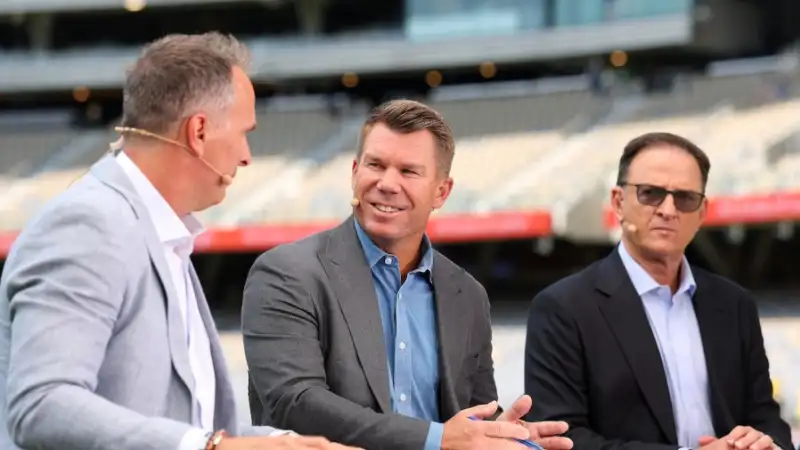
Perhaps the most consequential intervention has come from David Warner, one of the three players who received lengthy suspensions.
Warner has publicly endorsed Khawaja’s version of events, describing his account as “100 per cent accurate”.
In a social media statement, Warner thanked Khawaja for speaking out and questioned why the former opener had not been interviewed during Cricket Australia’s original investigation.
“Uzzie, I throw my full support behind you. I thank you for everything you’ve done,” Warner wrote.
He added: “It’s 100 per cent accurate, what you’ve said.”
Warner subsequently turned his attention towards the investigation itself, describing the process as rushed and poorly handled.
He also raised questions about whether bowlers Mitchell Starc, Josh Hazlewood and Nathan Lyon had been interviewed by Cricket Australia.
In a social media post, Warner wrote:
“As far as I am aware, CA did not interview Josh Hazlewood, Mitchell Starc or Nathan Lyon in their 2018 investigation.”
He questioned how Cricket Australia could maintain its position that the bowlers had no knowledge of the operation if they had not been properly interviewed.
“It looks like they had decided who they wanted to blame from the very beginning … ran a shoddy investigation to serve the purpose and now they want to maintain the false narrative that the bowlers had no idea.”
He concluded: “That stinks of a cover-up.”
However, this particular allegation has been challenged. ABC Sport reported that sources connected to the bowling group confirmed all four frontline bowlers were interviewed during the investigation. Cummins himself also confirmed he had spoken to investigators.
Warner later clarified that his point was that he had never been informed that the bowlers had been interviewed or given access to their statements.
“That information would’ve been pretty useful when I was forced to make decisions back in 2018. Why weren’t we given all the evidence by CA?” he wrote.
The distinction is important. There is currently no established evidence that Cricket Australia deliberately concealed the bowlers’ statements, but Warner’s criticism raises legitimate questions about the transparency of the process and what information was made available to the three sanctioned players.
Cummins refuses to accept Khawaja’s version

The strongest rejection of the new allegations has come from Australia’s current Test captain Pat Cummins.
A member of the 2018 touring squad, Cummins held an extended press conference on November 13, addressing Khawaja’s claims and defending the position he has maintained for eight years.
“When he says ‘we all knew’, if by that he means we knew sandpaper was going out on the field, he’s 100 per cent wrong,” Cummins said.
“I’ve said that consistently for the last eight years; I did not know that was happening.”
Cummins went further, rejecting the suggestion that he and other members of the bowling group had helped devise a plan to alter the ball.
“But I think Usman actually says things that are far more serious than that. He says that I and others were architects of a scheme to ball tamper with sandpaper; that’s complete and utter nonsense.”
He also expressed disappointment that Khawaja had apparently warned Bancroft about using sandpaper without stopping the operation.
“I’m genuinely shocked this week when I found out Usman admitted that he told Cam to be careful when using sandpaper,” Cummins said.
“Usman’s a friend, but friends aren’t casual with each other’s lives and reputations.”
Cummins’ position is supported by the joint statement issued by the four frontline bowlers in 2021, when Bancroft’s comments about the possible awareness of the bowling group reopened the controversy.
“We did not know a foreign substance was taken onto the field to alter the condition of the ball until we saw the images on the big screen at Newlands,” the statement said.
Starc has also maintained that his recollection has not changed.
“We were heavily grilled through the process at the time and since,” he said recently.
“I won’t speak on behalf of the bowlers but, from where I stand, my opinion hasn’t changed, and my recollection hasn’t changed from what we said in 2021.”
Cricket Australia draws a line
Despite the renewed controversy, Cricket Australia has indicated that it has no intention of reopening the investigation.
Chief executive Todd Greenberg said the governing body remained comfortable with the findings of the original inquiry.
“There are specific details in his book that contradict the versions that have been provided by others,” Greenberg said.
He added that players had been given opportunities to provide information at the time and could still come forward with relevant evidence.
“We don’t see any compelling reason to open the investigation or revisit this again. I don’t think there’s anything that can be gained from that.”
Cricket Australia’s position is that the original investigation identified Smith, Warner and Bancroft as the individuals responsible for the ball-tampering operation. The three were sent home from the tour and subsequently suspended.
Smith and Warner received 12-month bans from international and domestic cricket, while Bancroft was suspended for nine months.
Coach Darren Lehmann was cleared of involvement and subsequently resigned from his position. Former batting coach Graeme Hick has also disputed suggestions that he knew about the alleged wider discussions, according to Reuters.
Eight years later, the biggest question remains unanswered
The significance of the latest revelations extends beyond establishing who physically handled the sandpaper.
The real issue is whether the original investigation captured the full extent of the culture, discussions and decision-making that led to one of cricket’s most notorious incidents.
Khawaja has acknowledged that he knew what was happening and admits that he warned Bancroft to be careful. He also says he wanted the entire team to accept collective responsibility after the scandal broke.
According to his account, that position failed to gain sufficient support during a subsequent team meeting.
He has also described the episode as the culmination of an Australian cricket culture built around a win-at-all-costs mentality.
Looking back, Khawaja believes the scandal eventually forced Australian cricket to rediscover humility.
“The best things come out of the worst times. I genuinely believe, for the Australian cricket team, the best thing that came out of Sandpaper is we found humility again,” he said.
There is an important distinction between collective responsibility for a team’s culture and individual responsibility for an illegal act. Every member of a dressing room cannot automatically be held equally responsible for an action simply because they were part of the same team.
But equally, if Khawaja and Sayers’ accounts are accurate, the question of why three players carried the overwhelming burden of punishment deserves serious examination.
Bancroft, Smith and Warner served their suspensions and returned to international cricket. The Australian team subsequently underwent a significant cultural transformation under Justin Langer and later under the leadership of Cummins.
Yet the latest revelations suggest that the story of Cape Town 2018 may never have been as straightforward as the original findings suggested.
Cricket Australia might be comfortable with its investigation, and Cummins might remain adamant that he knew nothing about the use of sandpaper.
But with Khawaja, Warner and Sayers now publicly challenging the established narrative, the controversy has moved beyond a simple disagreement over memories.
Eight years on, the question is no longer simply who used the sandpaper. It is whether Australian cricket ever told the whole story.


