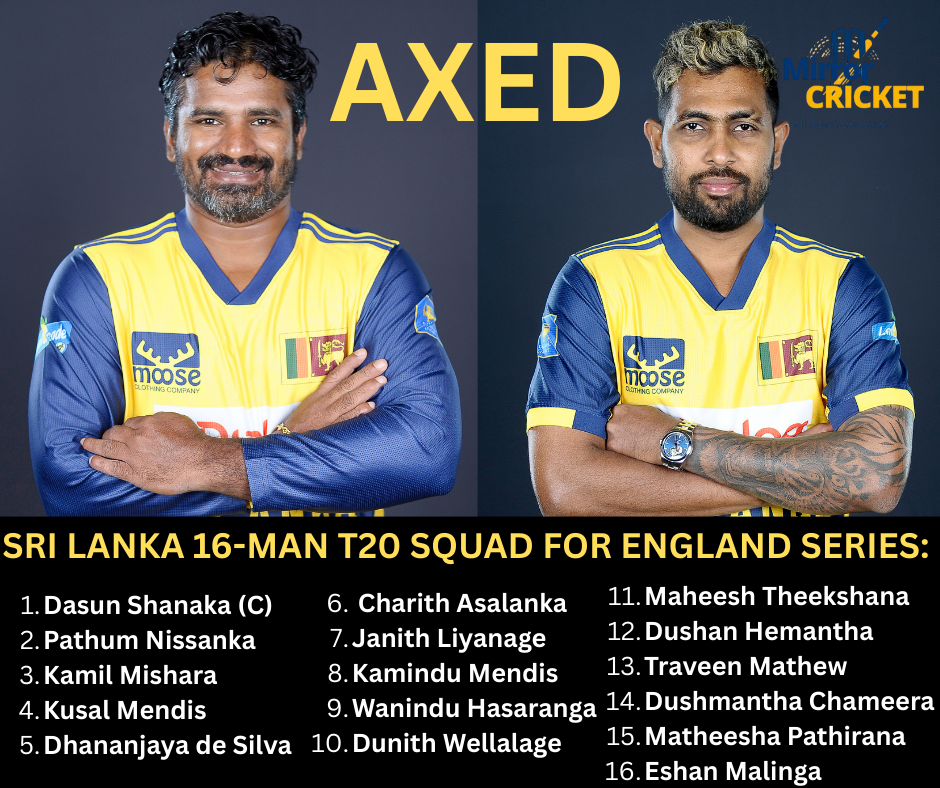
Sri Lanka’s selection for the three-match T20 series against England has delivered a clear, if uncomfortable, message. With just weeks remaining before the home ICC T20 World Cup, the selectors have begun drawing firm lines, prioritising immediacy and reliability over past achievement. The most telling indicators of that shift are the absences of Kusal Janith Perera and Nuwan Thushara from the 16-man squad.
Rather than sudden exclusions, both omissions feel like conclusions reached over time. In Kusal Janith’s case, the warning signs were evident well before the squad announcement. Despite being named in the extended group for the recent Pakistan series, the left-hander never earned a place in the playing XI. For a batter once considered indispensable in Sri Lanka’s white-ball plans, that silence spoke volumes. Selection, after all, is rarely about what is said publicly. It is shaped by what opportunities are quietly withheld.
Kusal Janith’s decline from match-winner to fringe option reflects the unforgiving nature of modern T20 cricket. The format leaves little room for nostalgia. Power, tempo, fitness and repeatability are the currencies that matter. While his ability has never been in doubt, the selectors appear to have concluded that he no longer fits the blueprint they are assembling for a World Cup campaign played at breakneck pace. In practical terms, this England series was his final window. Its closure has all but sealed his fate.
Nuwan Thushara’s omission follows a different logic but leads to a similar outcome. His chance came in the opening T20 against Pakistan, and it slipped away quickly. An expensive spell of 31 runs from two overs exposed not just poor figures but a worrying lack of control. At the international level, especially with a surplus of fast bowling options available, such lapses carry immediate consequences. With competition fierce and margins slim, inconsistency has proved fatal to his World Cup aspirations.
Beyond these changes, continuity has been the guiding principle. The selectors have largely backed the group that featured against Pakistan, signalling confidence in the core while fine-tuning around the edges. Yet continuity should not be mistaken for certainty. Leg-spinner Dushan Hemantha remains under scrutiny despite his standout performance against Zimbabwe in September 2025, when he claimed three wickets for 38. It was a spell that hinted at value, but one performance alone may not be enough to guarantee a place in the final World Cup fifteen.
Traveen Mathew, meanwhile, continues to hold his spot despite not featuring in the Pakistan series, suggesting that selectors still see potential utility even if opportunities have yet to materialise.
As co-hosts of the T20 World Cup alongside India, Sri Lanka will benefit from familiar conditions and strong home support. Yet recent history tempers any sense of comfort. Too often, global tournaments have exposed the side’s chronic inconsistency, turning promise into premature exits. The captain’s assurances of reclaiming a title last won in 2014 are aspirational, but belief alone will not bridge the gap between potential and performance.
That is why the England series carries weight beyond its three matches. It is a final examination, not only of combinations but of temperament and readiness. The exclusion of players such as Kusal Janith Perera and Nuwan Thushara reinforces the central theme of this selection phase. In the eyes of the selectors, reputation no longer buys time. Only present-day output, delivered under pressure and without compromise, will earn a place when the World Cup lights finally come on.
Sri Lanka 16-man T20 squad:
Dasun Shanaka (Captain), Pathum Nissanka, Kamil Mishara, Kusal Mendis, Dhananjaya de Silva, Charith Asalanka, Janith Liyanage, Kamindu Mendis, Wanindu Hasaranga, Dunith Wellalage, Maheesh Theekshana, Dushan Hemantha, Traveen Mathew, Dushmantha Chameera, Matheesha Pathirana, Eshan Malinga